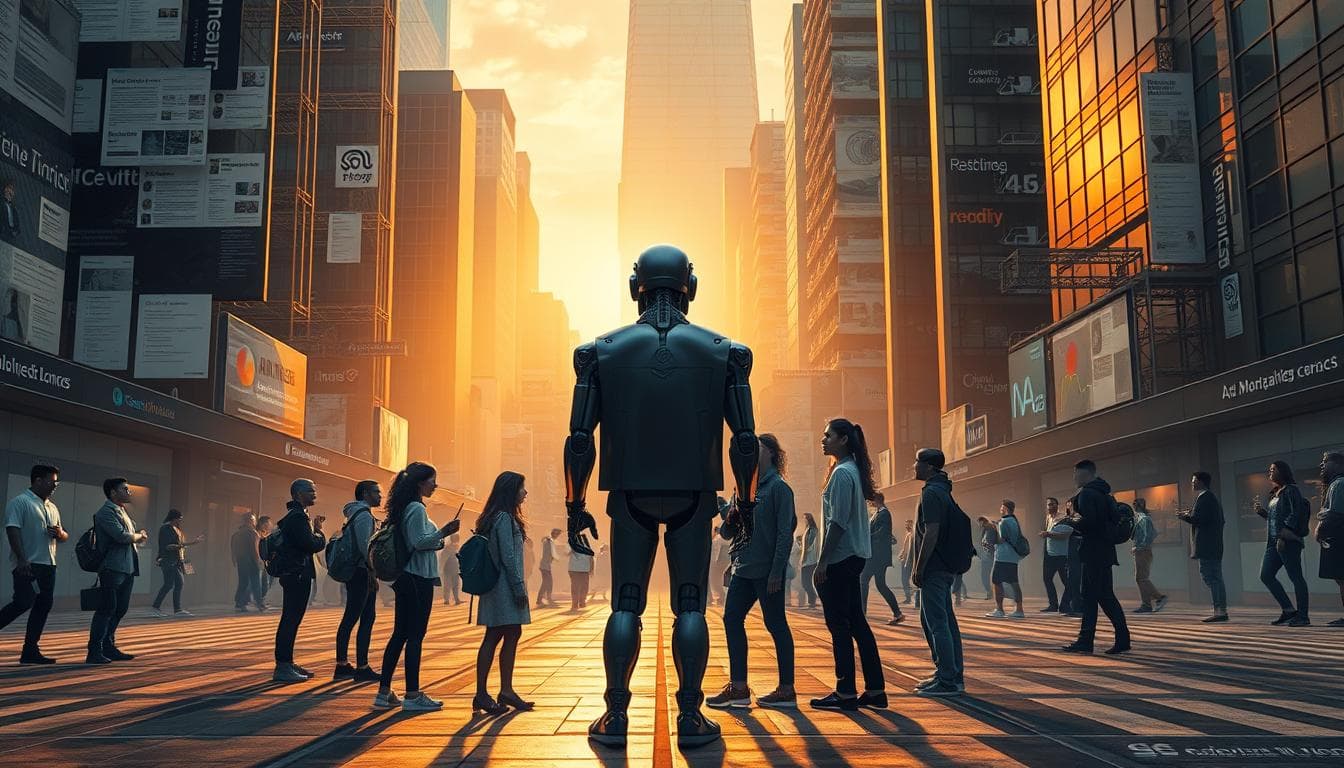
AI vs. Designers: How Graduates Are Facing the Job Market
The job market for graduates in the design field is undergoing a significant shift. With the rise of AI, new challenges and opportunities are emerging for young professionals.
As artificial intelligence becomes increasingly integrated into the industry, it's changing the way companies approach hiring and project execution.

Graduates are now facing a job market where AI is not just a tool, but a factor that influences their career paths.
Key Takeaways
- The impact of AI on the design job market is significant.
- Graduates must adapt to an industry where AI is increasingly prevalent.
- New opportunities are emerging for young professionals in design.
- The role of AI in hiring and project execution is changing.
- Understanding AI is crucial for graduates to succeed.
The Evolving Landscape of Design in the AI Era
The design industry is undergoing a significant transformation with the integration of Artificial Intelligence (AI). As we navigate this change, it's essential to understand the shifting landscape and how it affects designers and employers alike.
Traditional Design Roles vs. Modern Expectations
The traditional roles of designers are evolving to meet modern expectations. With AI becoming a crucial tool in the design process, the skills required to succeed in the industry are changing.
Changes in Industry Demands Since 2020
Since 2020, industry demands have shifted significantly. Employers now expect designers to be proficient in AI-powered tools and technologies. This shift has led to a greater emphasis on technical skills that complement AI capabilities.
Employer Expectations in the Digital Age
In the digital age, employers expect designers to be adaptable and proficient in the latest technologies. This includes understanding how to effectively collaborate with AI systems to produce innovative designs.
Key Statistics on AI Adoption in Design Industries
The adoption of AI in design industries is on the rise. Here are some key statistics that highlight this trend:
| Industry | AI Adoption Rate | Expected Growth |
| Graphic Design | 30% | 50% |
| UI/UX Design | 40% | 60% |
| Product Design | 25% | 45% |
These statistics demonstrate the growing importance of AI in the design industry. As AI continues to evolve, it's crucial for designers to stay ahead of the curve and adapt to the changing landscape.
How AI is Transforming the Design Field
AI is transforming the design landscape by introducing new tools and methodologies. This transformation is not just about adopting new technologies; it's about reimagining the design process itself.
AI-Powered Design Tools and Their Capabilities
AI-powered design tools are revolutionizing the creative process by automating repetitive tasks, enhancing creativity, and improving design quality. These tools leverage machine learning algorithms to analyze design patterns, predict user preferences, and generate innovative solutions.
Generative Design Platforms
Generative design platforms use AI to create multiple design options based on specific parameters and constraints. This allows designers to explore a wide range of possibilities and select the most effective solutions.
Automated Prototyping and Testing
Automated prototyping and testing enable designers to quickly iterate and refine their designs. AI-driven tools can simulate user interactions, identify potential issues, and provide feedback for improvement.
Areas of Design Most Affected by Automation
Automation is having a significant impact on various areas of design, particularly those involving repetitive or routine tasks.
Graphic Design and Visual Assets
Graphic design and visual assets creation are being transformed by AI-powered tools that can generate logos, icons, and other visual elements. These tools can produce high-quality designs quickly and efficiently.
UI/UX and Web Design
UI/UX and web design are also being impacted by automation, with AI-driven tools helping to create user interfaces, wireframes, and prototypes. These tools can analyze user behavior and preferences to inform design decisions.
| Design Area | Impact of Automation | Benefits |
| Graphic Design | Automated generation of visual assets | Increased efficiency, consistency |
| UI/UX Design | AI-driven user interface creation | Improved user experience, reduced design time |
| Web Design | Automated prototyping and testing | Faster iteration, enhanced design quality |
Challenges Design Graduates Face in an AI-Dominated Market
Design graduates today are entering a job market where AI is not just a tool, but a competitor. The rapid evolution of AI technologies has significantly altered the landscape of the design industry, presenting fresh challenges for new graduates.
Skill Obsolescence Concerns
One of the primary concerns for design graduates is the potential for skill obsolescence. As AI takes over routine and repetitive tasks, there's a fear that the skills they've spent years honing may become less relevant. To stay competitive, graduates must now consider acquiring skills that complement AI, such as:
- Data analysis and interpretation
- AI tool proficiency
- Strategic thinking and creativity
Shifting Job Requirements and Expectations
The job market is not just about having the right skills; it's also about meeting the evolving job requirements and expectations. Employers now often look for designers who can work alongside AI, understanding its capabilities and limitations. This shift means graduates need to be adaptable and willing to continuously learn and update their skill set.
Psychological Impact of Competing with Technology
The presence of AI in the design industry also has a psychological impact on graduates. The pressure to compete with machines can be daunting, leading to issues such as:
Imposter Syndrome in the Age of AI
Imposter syndrome can be particularly prevalent as graduates compare their work to the seemingly effortless outputs of AI. It's essential for them to recognize that AI is a tool, not a replacement for human creativity.
Building Confidence as a Human Designer
To combat these feelings, graduates must focus on building their confidence as human designers. This involves understanding the unique value they bring to projects, such as creativity, empathy, and problem-solving skills that AI currently cannot replicate.
By acknowledging these challenges and proactively addressing them, design graduates can better navigate the AI-dominated job market and find their place within it.
Opportunities Created by AI for Design Professionals
AI's impact on design is multifaceted, bringing about new roles and enhancing existing ones. As the design industry continues to evolve with technological advancements, professionals are finding innovative ways to leverage AI to their advantage.
New Roles Emerging at the Intersection of Design and AI
The fusion of design and AI has given rise to new job roles that require a blend of creative and technical skills. Two such emerging roles are particularly noteworthy.
AI-Design Specialists
AI-design specialists are professionals who bridge the gap between designers and AI developers. They possess a deep understanding of both design principles and AI capabilities, enabling them to create more effective and user-friendly AI-driven design solutions.
Human-Centered Design Consultants
Human-centered design consultants focus on ensuring that AI systems are designed with human needs and behaviors in mind. They play a crucial role in making AI more accessible and intuitive for end-users.
How AI Can Enhance Rather Than Replace Human Creativity
Rather than replacing human creativity, AI can significantly enhance it by automating mundane tasks and providing designers with powerful tools for creativity.
Collaboration Models That Work
Effective collaboration between humans and AI involves understanding the strengths of both. By leveraging AI for data analysis and pattern recognition, designers can focus on high-level creative decisions.
Leveraging AI for Mundane Tasks
AI can take over repetitive and time-consuming tasks, freeing up designers to concentrate on more strategic and creative aspects of their work. This not only boosts productivity but also enhances job satisfaction.
| Role | Description | Skills Required |
| AI-Design Specialist | Bridge between designers and AI developers | Design principles, AI capabilities, programming skills |
| Human-Centered Design Consultant | Ensure AI systems are user-friendly | User experience design, human behavior understanding, AI knowledge |
The Future of Design Education in the United States
In the age of AI, traditional models of design education are being challenged to adapt and evolve. As the design industry continues to transform, it is crucial to examine how design education can better prepare students for an AI-driven world.
Current Curriculum Gaps in Preparing Students for an AI World
Design education in the U.S. faces significant challenges in keeping pace with the rapid advancements in AI technology. Two key areas where curriculum gaps are evident are technical vs. conceptual training and industry-academic disconnects.
Technical vs. Conceptual Training
The increasing use of AI in design has created a need for designers who possess both technical skills and conceptual understanding. Balancing these aspects is crucial for effective design education.
Industry-Academic Disconnects
There is often a gap between what industry needs and what academic programs provide. Bridging this divide requires collaboration between design schools and industry professionals.
Progressive Programs Embracing AI-Design Integration
Some design schools are pioneering the integration of AI into their curricula. These programs offer valuable insights into how design education can be reimagined for the AI age.
Case Studies from Leading Design Schools
Institutions like the Rhode Island School of Design (RISD) and the Massachusetts College of Art and Design are incorporating AI into their design programs. These case studies demonstrate innovative approaches to AI-design integration.
Student Perspectives on AI-Inclusive Education
Students are embracing the opportunity to learn about AI in design. Their feedback highlights the importance of hands-on experience with AI tools and the need for a curriculum that reflects industry trends.
Essential Skills for Design Graduates in the AI Age
As AI continues to reshape the design industry, graduates must equip themselves with a new set of skills to remain competitive. The evolving landscape demands a blend of technical, soft, and AI-related skills.
Technical Skills Beyond Traditional Design
Design graduates now need to possess technical skills that go beyond traditional design education. This includes:
Programming and Data Literacy
Understanding programming basics and being able to interpret data are crucial. Proficiency in languages like Python or JavaScript can significantly enhance a graduate's ability to work with AI tools.
AI Tool Proficiency
Familiarity with AI-powered design tools is essential. Graduates should be able to leverage these tools to streamline their workflow and improve design quality.
Soft Skills That AI Cannot Replicate
While AI excels in many areas, there are soft skills that remain uniquely human. These include:
Emotional Intelligence in Design
Emotional intelligence allows designers to understand and meet the emotional needs of users, creating more empathetic and user-centered designs.
Cultural Context and Sensitivity
Understanding cultural nuances is vital for designing products that are inclusive and accessible to diverse user bases.
Understanding AI as a Collaborative Tool
Graduates must learn to view AI not as a replacement, but as a collaborative tool that can enhance their creative capabilities. By understanding how to work alongside AI, designers can focus on high-level creative decisions while AI handles more repetitive or data-intensive tasks.

Success Stories: Design Graduates Thriving Alongside AI
As AI continues to transform the design industry, many graduates are finding innovative ways to thrive alongside this technology. The job market is becoming increasingly competitive, but those who have adapted are reaping the benefits.
Case Studies of Innovative Approaches to the Job Market
Recent graduates are taking unconventional paths to success. For instance, some are leveraging AI tools to enhance their design capabilities, while others are creating new roles that didn't exist before.
- Utilizing AI for repetitive tasks, freeing up time for creative work
- Developing new skills that complement AI, such as data analysis and interpretation
- Creating hybrid roles that combine design with AI expertise
Profiles of Recent Graduates
Let's look at a few examples of recent graduates who have successfully navigated the job market. Emily Chen, a graphic design graduate, used AI-powered tools to automate routine design tasks, allowing her to focus on high-level creative projects.
Their Strategies and Insights
These graduates share a common trait: they are not afraid to experiment and learn new technologies. "AI is not a replacement for human creativity; it's a tool that enhances it," says David Lee, a UX design graduate who now works on AI-driven design projects.
Lessons from Those Who Have Adapted Successfully
The success stories of these graduates offer valuable insights for current students and professionals alike. By embracing AI and developing complementary skills, designers can not only survive but thrive in this new landscape.
Common Traits of Adaptable Designers
So, what makes these designers so successful? Key traits include a willingness to learn, adaptability, and a proactive approach to embracing new technologies.
Advice for Current Students
For those just starting their design journey, the advice is clear: stay curious, be open to new technologies, and focus on developing skills that complement AI. By doing so, you'll be well-prepared to thrive in a design industry that's increasingly driven by AI.
Practical Strategies for Breaking Into the Design Industry Today
To stand out in a competitive job market, design graduates need to leverage AI while showcasing their unique human skills. This involves a multi-faceted approach that includes building a strong portfolio, effective networking, and finding the right niche.
Building a Portfolio That Showcases Human-AI Collaboration
A strong portfolio is crucial for demonstrating a graduate's ability to work with AI tools. It should highlight projects that showcase both technical skills and creative problem-solving.
Key elements to include:
- Projects that demonstrate AI integration
- Case studies of successful human-AI collaboration
- Examples of creative problem-solving using AI tools

Networking and Community Engagement Tactics
Networking is vital in the design industry. Engaging with both online and offline communities can open up opportunities and provide valuable insights.
Online Communities for Design Professionals
Joining online forums and social media groups can help graduates stay updated on industry trends and best practices.
Making the Most of Industry Events
Attending conferences and workshops provides opportunities to meet industry leaders and learn about the latest AI developments.
Specialization vs. Versatility: Finding Your Niche
Graduates must decide whether to specialize in a particular area or develop a broad range of skills. Both approaches have their advantages.
| Specialization | Versatility |
| Deep expertise in a specific area | Ability to adapt to different projects |
| Higher demand in niche markets | Better equipped to handle diverse tasks |
Conclusion: The Future of Human-AI Collaboration in Design
The design industry is on the cusp of a revolution, driven by the integration of AI technologies. As we've explored, this shift brings both challenges and opportunities for design graduates. The key to thriving in this new landscape lies in embracing human-AI collaboration, where the creative potential of humans is augmented by the capabilities of AI.
By acquiring the right mix of technical and soft skills, design professionals can position themselves at the forefront of this change. The future of design is not about humans versus AI, but about how together they can create innovative, effective, and beautiful designs. As the industry continues to evolve, it's clear that the most successful designers will be those who can harness the power of AI to enhance their creativity and productivity.
The future of design is bright, with human-AI collaboration set to unlock new possibilities and push the boundaries of what's possible. As we move forward, it's essential to continue the conversation around the opportunities and challenges presented by AI in design, ensuring that we're prepared to capitalize on the potential of this emerging field.