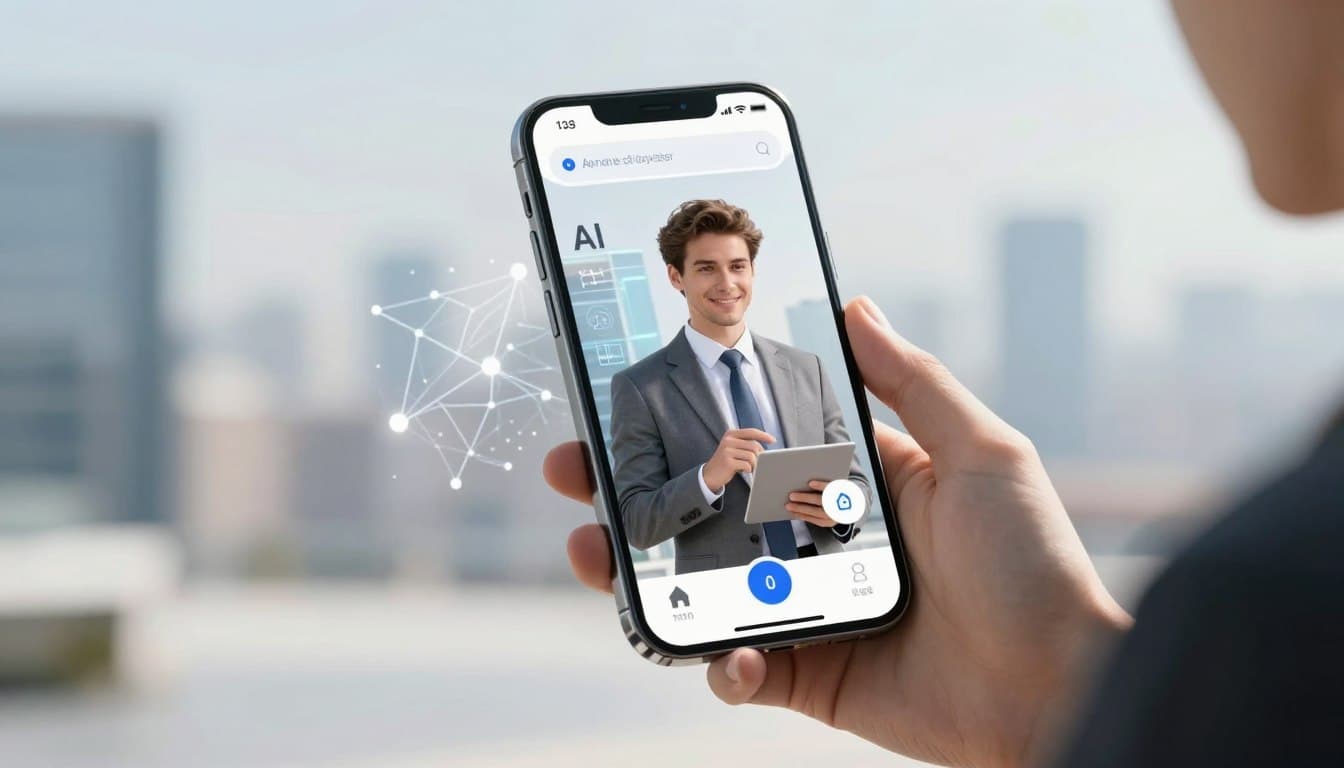
AI's Impact on Mobile App User Experience Design
Have you ever noticed how your phone seems to know exactly what you need? Today, AI is changing how we interact with every mobile app on our home screens. This shift is not just a simple trend but a significant transformation for the digital world.
It is all about making the user experience feel natural and very helpful. Developers use smart tools to create a fluid interface that learns from your daily habits. This means your favorite programs get better the more you use them.

By using these advanced systems, creators can focus on what truly matters to you. A great mobile app now feels like a personal assistant in your pocket. This fresh design approach ensures that technology works for people.
Exploring these new features helps us see how AI boosts the user experience every single day. We are witnessing a new era of digital connection and ease. It is an exciting time for anyone who loves high-tech tools.
Key Takeaways
- AI creates a personalized journey for every unique user.
- Smarter interfaces help you finish tasks much faster than before.
- Predictive tools can guess your next move with incredible ease.
- Advanced accessibility makes apps useful for many more people.
- Faster data processing keeps the application running smoothly.
- Your devices now act more like helpful assistants than static tools.
1. The Convergence of AI and Mobile User Experience
The fusion of AI and mobile UX is redefining the mobile app landscape, offering users more streamlined and adaptive interactions. Artificial intelligence is being increasingly integrated into mobile UX design to create more intuitive and personalized experiences. This convergence is transforming the way users interact with mobile applications, making them more engaging and user-friendly.
AI-driven technologies such as machine learning and natural language processing are enabling mobile apps to learn from user behavior and adapt accordingly. For instance, AI can analyze user interactions to predict their needs and preferences, allowing apps to provide tailored content and recommendations.
The impact of AI on mobile UX is multifaceted. It not only enhances the user experience but also improves app functionality and efficiency. AI-powered chatbots, for example, are being used to provide customer support and help users navigate through apps more effectively.
| AI Technology | Application in Mobile UX | Benefits |
| Machine Learning | Predictive analytics and personalized content | Enhanced user engagement and satisfaction |
| Natural Language Processing | Voice commands and chatbots | Improved user interaction and accessibility |
| Computer Vision | Image recognition and object detection | Innovative features and enhanced security |
As AI continues to evolve, its integration with mobile UX will lead to even more innovative and sophisticated user experiences. The future of mobile app design lies in leveraging AI to create seamless, intuitive, and highly personalized interactions.
2. Understanding AI Technologies Shaping Mobile App Design
AI is transforming the landscape of mobile app design through various innovative technologies. The integration of these technologies is not only enhancing the user experience but also making mobile apps more intuitive and personalized.
Machine learning and predictive analytics are at the forefront of this transformation. By analyzing user behavior and preferences, machine learning algorithms can predict user needs, enabling apps to offer tailored experiences.
2.1. Machine Learning and Predictive Analytics
Machine learning allows mobile apps to learn from user interactions and improve over time. Predictive analytics, a subset of machine learning, helps in forecasting user behavior, thereby enabling proactive measures to enhance user engagement.
2.2. Natural Language Processing
Natural Language Processing (NLP) is another critical AI technology shaping mobile app design. NLP enables apps to understand and interpret human language, facilitating more natural and intuitive interactions.
2.3. Computer Vision and Image Recognition
Computer vision and image recognition are revolutionizing the way mobile apps interact with visual data. This technology allows apps to identify objects, people, and patterns within images.
Visual search capabilities, powered by computer vision, enable users to search for products or information using images rather than text. This feature is particularly useful in e-commerce apps.
2.3.2. Facial Recognition for Authentication
Facial recognition, another application of computer vision, is used for secure authentication in mobile apps. It provides a convenient and secure way to verify user identities.
These AI technologies are collectively transforming the mobile app design landscape, making apps more user-friendly, secure, and personalized.
3. Personalization Through AI-Driven User Experiences
Personalization through AI is transforming the mobile app landscape, offering users a more intuitive and relevant experience. By leveraging AI technologies, mobile apps can now tailor their interfaces and content to meet the unique needs and preferences of individual users.
This level of personalization not only enhances user satisfaction but also significantly boosts engagement and retention rates. The key to achieving this lies in the effective application of AI-driven features such as adaptive user interfaces, content recommendations, and behavioral pattern recognition.
3.1. Adaptive User Interfaces
Adaptive user interfaces (UIs) are designed to adjust and modify their layout, elements, and overall user experience based on individual user behavior and preferences. AI algorithms analyze user interactions to predict and implement the most suitable UI configurations, making the app more intuitive and user-friendly.
For instance, an app might change the layout or color scheme based on the time of day or the user's most frequently used features. This adaptability ensures that the app remains engaging and easy to navigate.
3.2. Content Recommendations and Curation
AI-powered content recommendations have become a staple in many successful mobile apps. By analyzing user behavior, AI can curate content that is most relevant to the user, enhancing their overall experience.
- Personalized news feeds
- Product recommendations in e-commerce apps
- Customized entertainment content
These recommendations not only keep users engaged but also encourage them to explore more within the app, thereby increasing the app's overall value proposition.
3.3. Behavioral Pattern Recognition
Behavioral pattern recognition involves analyzing user interactions to identify patterns and predict future behavior. This insight allows apps to preemptively adapt and improve the user experience.
3.3.1. Learning from User Interactions
AI systems learn from every user interaction, whether it's a click, swipe, or search query. Over time, this data helps in understanding user preferences and tailoring the app experience accordingly.
3.3.2. Dynamic Feature Prioritization
By understanding user behavior, AI can dynamically prioritize features and content, ensuring that the most relevant and frequently used aspects of the app are readily accessible.
The combination of these AI-driven personalization techniques is revolutionizing the mobile app landscape. By offering highly personalized experiences, apps can significantly enhance user satisfaction and loyalty.
4. Conversational Interfaces and AI-Powered Chatbots
The integration of AI-powered chatbots and conversational interfaces is revolutionizing mobile app interactions. These technologies are not only enhancing user experiences but also providing businesses with innovative ways to engage with their customers.
4.1. Intelligent Virtual Assistants in Mobile Apps
Intelligent virtual assistants are becoming increasingly prevalent in mobile apps, offering users a more personalized and interactive experience. These assistants, powered by AI and machine learning, can perform a variety of tasks, from answering queries to providing personalized recommendations.
Key Features of Intelligent Virtual Assistants:
- Personalized Recommendations
- Task Automation
- Real-time Support
4.2. Context-Aware Communication
Context-aware communication is another significant aspect of conversational interfaces. By understanding the user's context, chatbots can provide more relevant and timely responses, enhancing the overall user experience.
Benefits of Context-Aware Communication:
- Improved User Engagement
- Enhanced Personalization
- Better Customer Support
4.3. Natural Language Understanding for Better Interactions
Natural Language Understanding (NLU) is crucial for effective conversational interfaces. NLU enables chatbots to comprehend the nuances of human language, leading to more accurate and helpful responses.
| NLU Capabilities | Description | Impact on User Experience |
| Intent Recognition | Identifying the user's intent behind their query | More accurate responses |
| Entity Extraction | Extracting specific information from user input | Personalized interactions |
| Sentiment Analysis | Understanding the user's emotional tone | Empathetic responses |

In conclusion, conversational interfaces and AI-powered chatbots are significantly enhancing mobile app user experiences. By incorporating intelligent virtual assistants, context-aware communication, and natural language understanding, businesses can create more engaging and personalized interactions with their users.
5. Voice User Interfaces Transforming Mobile Navigation
The rise of voice UI is transforming mobile navigation, making it more intuitive and hands-free. Voice user interfaces are changing the way users interact with mobile apps, providing a more seamless and accessible experience.
5.1. Voice Commands and Hands-Free Control
Voice commands allow users to navigate through apps without physically touching their devices. This feature is particularly useful in situations where hands-free control is necessary or preferred, such as while driving or cooking.
Benefits of Voice Commands:
- Enhanced accessibility for users with disabilities
- Increased convenience in multitasking scenarios
- Improved safety while performing tasks that require hands-free operation
5.2. Speech Recognition Accuracy and Improvements
Advancements in speech recognition technology have significantly improved the accuracy of voice UI. Modern speech recognition systems can understand complex commands and nuances in language, making voice navigation more reliable.
| Feature | Description | Benefit |
| Contextual Understanding | Ability to understand the context of the user's command | More accurate and relevant responses |
| Noise Cancellation | Technology that filters out background noise | Improved speech recognition in noisy environments |
| Personalization | Learning the user's voice and preferences over time | Enhanced user experience through tailored interactions |
5.3. Multimodal Interaction Design
Multimodal interaction design combines voice UI with other interaction modes, such as touch and gesture, to create a more flexible and intuitive user experience. This approach allows users to choose the most appropriate interaction method based on their context and preferences.
By integrating voice UI with other modalities, developers can create more versatile and user-friendly apps that cater to a wide range of needs and preferences.
6. AI-Enhanced Visual Design and Accessibility Features
AI is transforming mobile app user experience through enhanced visual design and accessibility features. The integration of AI technologies is not only making mobile apps more visually appealing but also more accessible to a wider range of users.
Automated Design Systems and Generative Design
Automated design systems utilize AI to streamline the design process, allowing for the creation of multiple design variations quickly. Generative design, a subset of automated design, uses algorithms to generate designs based on specific parameters set by designers. This approach enables designers to explore a vast number of design possibilities efficiently.
For instance, AI-powered tools can analyze design trends, user preferences, and brand guidelines to suggest optimal design elements such as color schemes, typography, and imagery. This not only speeds up the design process but also ensures that the design is both aesthetically pleasing and aligned with user expectations.
Accessibility Features Powered by AI
AI is significantly enhancing the accessibility of mobile apps. By incorporating AI-powered features, apps can become more inclusive for users with disabilities.
Screen Reading and Audio Descriptions
AI-driven screen reading technology can interpret and narrate the content on the screen, assisting visually impaired users. Additionally, AI can generate audio descriptions for multimedia content, further enhancing the app's accessibility.
Adaptive Text and Color Contrast
AI can dynamically adjust text size and color contrast based on the user's preferences or needs. For example, it can change the text size to make it more readable or adjust the color scheme to improve visibility for users with visual impairments.
Dynamic Layout Optimization for Different Devices
AI can optimize app layouts dynamically to fit various screen sizes and devices, ensuring a seamless user experience across different platforms. By analyzing user behavior and device characteristics, AI can adapt the layout to maximize usability and engagement.
For example, an app might use AI to rearrange its layout when a user switches from a smartphone to a tablet, ensuring that the content is displayed in the most user-friendly manner.

By leveraging AI-enhanced visual design and accessibility features, mobile apps can provide a more inclusive and engaging user experience. As AI technology continues to evolve, we can expect to see even more innovative applications in mobile app design.
7. Predictive User Behavior and Smart App Optimization
Predictive user behavior analysis is becoming a cornerstone in smart app optimization, driven by advancements in AI technology. By leveraging AI, developers can now anticipate user needs, personalize experiences, and streamline app functionality to enhance user engagement and retention.
7.1. Anticipatory Design Principles
Anticipatory design involves creating user interfaces that anticipate and respond to user needs before they are explicitly stated. AI algorithms analyze user behavior patterns to predict future actions, allowing apps to prepare and adapt accordingly. This proactive approach not only improves user satisfaction but also reduces friction in the user experience.
7.2. Smart Notifications and Perfect Timing
Smart notifications are a critical component of smart app optimization. AI-driven systems can analyze user behavior to determine the optimal time to send notifications, ensuring that they are relevant and timely. This reduces notification fatigue and increases the likelihood of user engagement.
7.3. Automated A/B Testing and Real-Time Analytics
AI enhances A/B testing by automating the process and providing real-time analytics. This enables developers to quickly identify the most effective design elements and make data-driven decisions.
7.3.1. AI-Driven Performance Monitoring
AI-driven performance monitoring allows for continuous analysis of app performance, identifying areas for improvement and optimizing the user experience in real-time. Key benefits include:
- Enhanced user engagement through personalized experiences
- Improved app stability and performance
- Data-driven decision making for future updates
7.3.2. Continuous UX Improvement Cycles
Continuous UX improvement cycles involve ongoing analysis and iteration to refine the user experience. AI facilitates this process by providing insights into user behavior and preferences, enabling developers to make targeted improvements.
By integrating AI into predictive user behavior analysis and smart app optimization, developers can create more intuitive, responsive, and user-friendly applications. This not only enhances user satisfaction but also drives long-term engagement and retention.
8. Real-World Applications of AI in Mobile App Design
Real-world applications of AI in mobile app design demonstrate its potential to transform user interactions across various industries. By integrating AI technologies, mobile apps can offer more personalized, intuitive, and engaging experiences.
AI's versatility allows it to be applied in numerous sectors, from e-commerce and healthcare to entertainment and finance. Let's explore some of these applications in detail.
8.1. E-Commerce and Retail Apps
E-commerce apps have leveraged AI to enhance customer experiences through personalized product recommendations, streamlined shopping processes, and improved customer service. For instance, Amazon's mobile app uses AI to suggest products based on browsing history and purchase behavior.
8.2. Healthcare and Fitness Applications
In healthcare, AI-powered apps have revolutionized patient care and fitness tracking. Apps like MyFitnessPal use AI to provide personalized diet and exercise plans based on user data and goals.
8.3. Entertainment and Streaming Platforms
Entertainment apps, such as Netflix, utilize AI to curate content recommendations, enhancing user engagement and satisfaction. AI-driven chatbots also assist in content discovery and customer support.
8.4. Financial Services and Banking Apps
Banking and financial services apps have adopted AI to improve security, offer personalized financial advice, and streamline transactions. For example, Bank of America's Erica is an AI-powered virtual assistant that helps users with banking tasks.
The following table summarizes the real-world applications of AI in different industries:
| Industry | AI Application | Example |
| E-commerce | Personalized Recommendations | Amazon |
| Healthcare | Fitness Tracking and Personalized Plans | MyFitnessPal |
| Entertainment | Content Curation and Recommendations | Netflix |
| Finance | Virtual Assistants and Personalized Advice | Bank of America's Erica |
9. Challenges and Ethical Considerations in AI-Powered UX Design
AI-powered UX design is not without its hurdles; ethical considerations and technical challenges are at the forefront of this evolving landscape. As AI continues to play a more significant role in shaping user experiences, it's crucial to address these challenges proactively.
9.1. Privacy and Data Security Concerns
One of the primary ethical considerations in AI-powered UX design is the concern over privacy and data security. AI systems often require vast amounts of user data to function effectively, raising questions about how this data is collected, stored, and used. Ensuring the security of this data is paramount to maintaining user trust.
"The use of AI in UX design must be balanced with the need to protect user privacy," emphasizes a recent study on AI ethics.
"As AI becomes more pervasive, the potential for data breaches and misuse of personal information grows, making robust data protection measures essential."
9.2. Balancing Automation with Human-Centered Design
Another challenge is balancing the level of automation with human-centered design principles. While AI can automate many tasks, it's essential to ensure that the user experience remains intuitive and engaging. Designers must strike a balance between leveraging AI for efficiency and maintaining a human touch.
9.3. Technical Implementation Barriers and Costs
Implementing AI in UX design comes with its own set of technical challenges and costs. This includes:
- High resource requirements for developing and training AI models
- The complexity of integrating AI with existing design and development frameworks
9.3.1. Resource Requirements
Developing sophisticated AI models requires significant resources, including large datasets and powerful computing hardware. This can be a barrier for smaller organizations or those with limited budgets.
9.3.2. Integration Complexity
Integrating AI into existing UX design processes can be complex, requiring significant changes to workflows and toolsets. This complexity can slow down the adoption of AI-powered UX design.
9.4. Avoiding Algorithmic Bias and Ensuring Inclusivity
Finally, there's the challenge of avoiding algorithmic bias and ensuring that AI-powered UX designs are inclusive. AI systems can perpetuate existing biases if they are trained on biased data, leading to unfair or discriminatory outcomes.
To mitigate this, designers must be vigilant in testing their AI systems for bias and ensuring that they are trained on diverse and representative datasets.
10. Conclusion
As we've explored throughout this article, AI is revolutionizing mobile app UX design by introducing innovative features such as personalization, conversational interfaces, and predictive user behavior. These advancements are significantly enhancing user experiences, making interactions more intuitive and engaging.
The integration of AI in mobile app UX design is not just a trend; it's a future prospect that is already transforming the way apps are designed and interacted with. With technologies like machine learning, natural language processing, and computer vision, the possibilities for creating more sophisticated and user-friendly apps are vast.
As AI continues to evolve, we can expect even more sophisticated features that will further personalize and streamline user experiences. The future of mobile app UX design lies in leveraging AI to create seamless, intuitive, and highly engaging interactions. By embracing AI in mobile app UX design, developers can stay ahead of the curve and deliver exceptional user experiences that meet the evolving needs of their users.