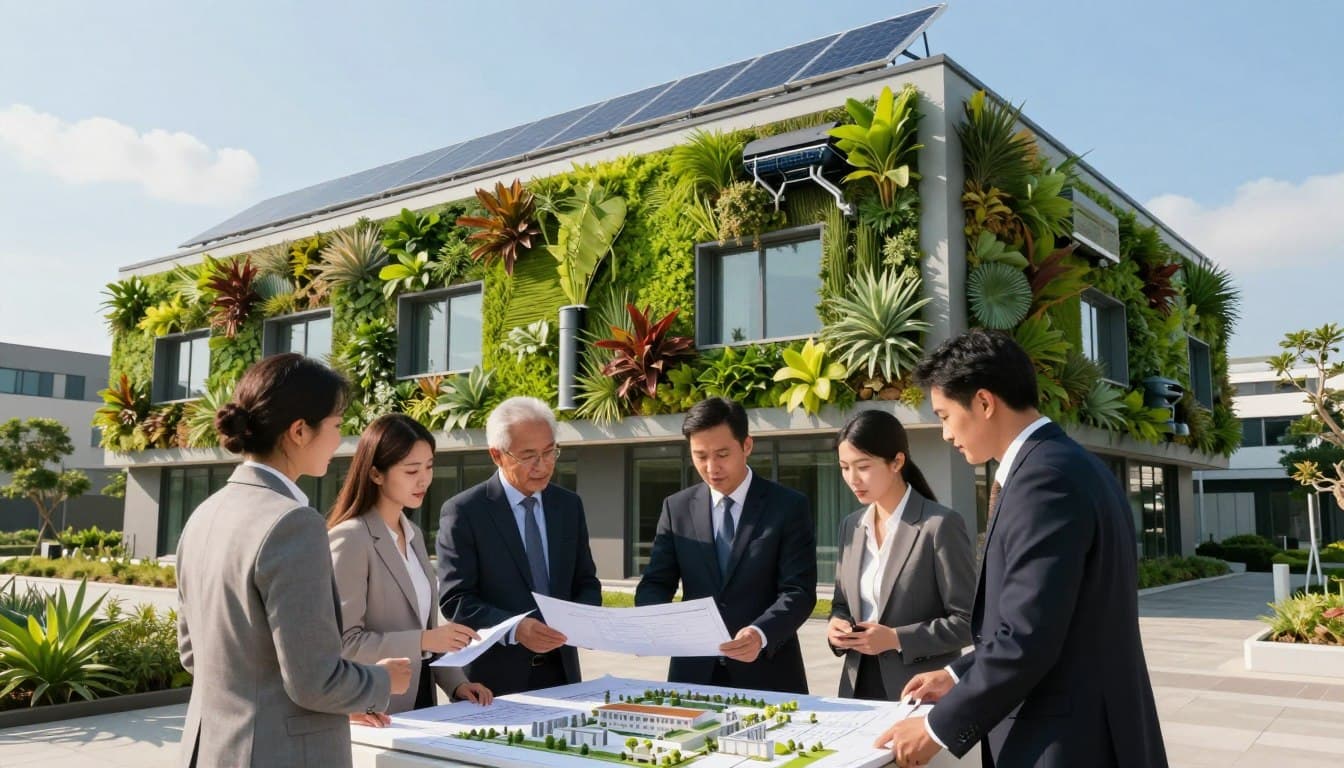
Beyond Aesthetics: Green Building Design Certification Explained
The concept of green building has evolved significantly over the years, shifting from a focus solely on aesthetics to a more holistic approach that incorporates sustainability and environmental consciousness.

Sustainable architecture is no longer just a trend; it's a necessity. As concern for the environment grows, so does the importance of building certification that validates a structure's adherence to rigorous environmental standards.
Understanding the intricacies of green building certification is crucial for architects, builders, and property owners alike. It's not just about creating buildings that look good; it's about constructing spaces that are environmentally responsible and sustainable for the long term.
Key Takeaways
- Green building certification goes beyond aesthetics, focusing on sustainability and environmental consciousness.
- Sustainable architecture is crucial for reducing environmental impact.
- Building certification validates a structure's adherence to environmental standards.
- Understanding green building certification is essential for industry professionals.
- It's about creating environmentally responsible and sustainable spaces.
The Evolution of Green Building Design
As concerns about climate change and environmental degradation have grown, so too has the importance of green building design. This shift towards sustainability in the construction industry is not merely a trend but a significant evolution in how buildings are designed, constructed, and operated.
From Conventional to Sustainable Architecture
Traditionally, building design focused on aesthetics and functionality, often at the expense of environmental considerations. However, the advent of sustainable architecture has led to a paradigm shift. Modern green buildings are designed to minimize their environmental footprint through energy-efficient systems, sustainable materials, and optimized natural lighting. This transition reflects a broader understanding of the impact buildings have on the environment and occupant health.
The Rise of Environmental Consciousness in Construction
The construction industry's growing environmental consciousness is driven by both regulatory pressures and consumer demand for greener buildings. As a result, green building certification programs have become increasingly popular, providing a framework for sustainable construction practices. These programs not only promote energy efficiency and water conservation but also enhance the overall wellbeing of building occupants. The rise of environmental consciousness in construction signifies a critical step towards a more sustainable future.
Understanding Green Building Certification Systems
As the world shifts towards more environmentally conscious practices, understanding green building certification systems is crucial. These systems are designed to promote sustainable building practices, reduce environmental impact, and improve occupant health and productivity.
LEED (Leadership in Energy and Environmental Design)
LEED certification is one of the most widely recognized green building certification systems globally. It was developed by the U.S. Green Building Council (USGBC) to promote sustainable building practices. LEED evaluates buildings based on several criteria, including energy efficiency, water conservation, and indoor air quality.
Certification Levels and Point System
LEED uses a point system to determine certification levels. Buildings can achieve Certified, Silver, Gold, or Platinum levels based on the number of points earned. The system encourages buildings to exceed minimum standards by offering credits for exceptional performance.
BREEAM (Building Research Establishment Environmental Assessment Method)
BREEAM is another prominent green building certification system, widely used in Europe. It assesses buildings based on their environmental performance, including energy and water use, health and wellbeing, and pollution. BREEAM certification is recognized for promoting sustainable and environmentally friendly building practices.
WELL Building Standard
The WELL Building Standard focuses on the health and wellbeing of building occupants. It evaluates buildings based on factors such as air quality, lighting, and acoustic comfort. WELL certification is designed to promote buildings that support occupant health and productivity.
Living Building Challenge and Other Certifications
The Living Building Challenge is a rigorous certification program that promotes buildings that are not only sustainable but also regenerative. Other notable certifications include the Green Globes and the International Living Future Institute's (ILFI) certifications, each with its unique focus and criteria.
In conclusion, various green building certification systems offer a range of approaches to promoting sustainability and environmental stewardship. Understanding these systems is essential for developers, architects, and building owners looking to reduce their environmental footprint.
Core Principles of Sustainable Design in Certification
At the heart of sustainable design certification are key principles that drive energy efficiency and environmental stewardship. These principles are fundamental to achieving green building certification and play a crucial role in reducing the environmental impact of buildings.
Energy Efficiency and Renewable Resources
Energy efficiency is a critical component of sustainable design, focusing on reducing energy consumption through optimized building design, insulation, and the use of energy-efficient systems. The integration of renewable energy sources such as solar, wind, and geothermal energy further enhances a building's sustainability.
Solar, Wind, and Geothermal Integration
The incorporation of renewable energy sources like solar panels, wind turbines, and geothermal systems can significantly reduce a building's reliance on non-renewable energy. For instance, solar panels can be integrated into building design to generate electricity while also serving as architectural features.
Water Conservation Strategies
Water conservation is another vital principle of sustainable design. Strategies include the use of low-flow fixtures, rainwater harvesting systems, and greywater reuse. These measures not only reduce water consumption but also decrease the strain on municipal water supplies.
Material Selection and Waste Reduction
The selection of materials and waste reduction strategies are also crucial. This involves specifying materials that are recycled, recyclable, or sustainably sourced, and implementing construction practices that minimize waste. By adopting these strategies, buildings can significantly reduce their environmental footprint.
The Certification Process Explained
Understanding the certification process is essential for architects, builders, and project owners seeking to validate their sustainable design efforts. The process involves several critical stages that ensure a project's compliance with rigorous green building standards.
Pre-assessment and Registration
The certification journey begins with pre-assessment and registration. This initial step involves evaluating the project's potential for meeting the certification requirements and registering the project with the relevant certification body. Proper pre-assessment is crucial as it sets the stage for a smooth certification process.
Documentation and Submission Requirements
Following registration, the next step is to prepare and submit the necessary documentation. This includes detailed project information, energy efficiency data, water conservation strategies, and material selection details. Accurate and comprehensive documentation is vital to demonstrate compliance with the certification standards.
Required Testing and Verification
As part of the documentation process, projects may be required to undergo testing and verification to ensure that they meet specific performance criteria. This can include energy audits, water usage assessments, and indoor air quality testing. Rigorous testing and verification provide assurance that the project performs as intended.

Final Review and Certification Award
The final stage involves a thorough review of the submitted documentation and test results. Upon successful completion of this review, the project is awarded certification. This achievement not only validates the project's sustainability features but also enhances its market value and appeal.
In conclusion, the certification process is a multi-faceted journey that requires careful planning, precise documentation, and rigorous testing. By understanding and navigating this process effectively, project stakeholders can achieve the desired certification and reap its numerous benefits.
Economic Benefits of Green Building Design Certification
Green building design certification is a strategic investment that yields various economic returns, enhancing the overall value of a property. By achieving such certification, building owners and developers can benefit from a range of financial advantages that contribute to the project's long-term success.
Operational Cost Savings Over Building Lifecycle
One of the primary economic benefits of green building design certification is the reduction in operational costs over the building's lifecycle. Efficient energy and water usage, along with minimized waste, lead to significant savings on utility bills. For instance, buildings certified under LEED have been shown to reduce energy consumption by up to 30% compared to non-certified buildings.
- Lower energy bills due to efficient systems and renewable energy sources.
- Reduced water consumption through advanced plumbing fixtures and rainwater harvesting systems.
- Minimized waste disposal costs through effective recycling programs.
Property Value Enhancement and Marketability
Green building design certification can also significantly enhance property value and marketability. Certified buildings are perceived as more desirable due to their sustainable features, leading to higher occupancy rates and rental income. Studies have shown that green-certified buildings command a premium in terms of both sale price and rental rates compared to non-certified properties.
- Increased property value due to the prestige associated with green certification.
- Higher rental income and occupancy rates driven by demand for sustainable spaces.
- Improved marketability through the appeal of eco-friendly features.
Tax Incentives and Government Rebates
Furthermore, achieving green building design certification can make projects eligible for various tax incentives and government rebates. Governments around the world offer financial incentives to encourage sustainable development, which can help offset the initial costs associated with achieving certification.
- Tax credits for energy-efficient systems and renewable energy installations.
- Grants and rebates for incorporating sustainable materials and practices.
- Deductions for depreciation of green building assets.
Environmental and Social Impacts
As the world shifts towards more sustainable practices, green building design certification plays a crucial role in reducing environmental footprint and enhancing social benefits. The significance of green building certifications extends beyond the buildings themselves, contributing to a healthier environment and more sustainable communities.
Carbon Footprint Reduction and Climate Change Mitigation
One of the primary environmental benefits of green building design certification is the reduction of carbon footprint. By incorporating energy-efficient systems, renewable energy sources, and sustainable materials, buildings can significantly decrease their greenhouse gas emissions. This not only helps in mitigating climate change but also reduces the strain on natural resources. Energy-efficient buildings are designed to consume less energy while maintaining optimal performance, thereby lowering emissions and operating costs.
Occupant Health, Productivity, and Wellbeing
Green buildings are designed to enhance the health, productivity, and wellbeing of their occupants. This is achieved through improved indoor air quality, natural lighting, and thermal comfort. By creating a healthier indoor environment, green buildings can boost occupant productivity and satisfaction. Studies have shown that employees working in green-certified buildings report fewer sick days and higher job satisfaction rates.
Community Benefits and Corporate Social Responsibility
Green building design certification also has significant social implications, particularly in terms of community benefits and corporate social responsibility. By investing in green buildings, companies can demonstrate their commitment to sustainability and social responsibility. This can enhance their brand reputation and contribute to the well-being of the surrounding community. Moreover, green buildings can serve as models for sustainable development, promoting environmental awareness and inspiring further green initiatives.
In conclusion, green building design certification has far-reaching environmental and social impacts. By reducing carbon footprint, enhancing occupant health and productivity, and contributing to community benefits, green buildings play a vital role in creating a more sustainable future.
Overcoming Challenges in the Certification Journey
Achieving green building certification can be a complex process, fraught with challenges that require careful planning and execution. The path to certification involves navigating through various obstacles, from initial cost assessments to final documentation submissions.
Common Obstacles and Practical Solutions
One of the primary challenges faced by builders is understanding and complying with the stringent requirements of green building certifications. Practical solutions include working with experienced consultants who can guide the process and ensure compliance.
Working with Consultants and Specialists
Engaging with specialists who have expertise in green building certifications can significantly ease the certification process. These professionals can provide valuable insights into the certification challenges and help in devising strategies to overcome them.
Balancing Initial Costs with Long-term Sustainability Goals
A significant hurdle in the certification journey is balancing the initial costs associated with green building practices with long-term sustainability objectives. While the initial investment may be higher, the long-term benefits, including energy savings and reduced maintenance costs, often outweigh these expenses.
| Initial Costs | Long-term Benefits |
| Higher upfront investment | Energy savings |
| Increased construction costs | Reduced maintenance costs |
| Specialized labor costs | Increased property value |
By understanding the challenges and leveraging practical solutions, builders can successfully navigate the certification process. Balancing initial costs with long-term sustainability goals is crucial for achieving green building certification.
Future Trends in Green Building Certification
As the world shifts towards more sustainable practices, the future of green building certification is poised to undergo significant transformations. The construction industry is witnessing a paradigm shift, driven by technological innovations, environmental concerns, and changing regulatory landscapes. Green building certification, once a marker of sustainability, is now becoming a standard practice, with future trends focusing on enhancing its rigor and scope.
Net-Zero and Regenerative Building Standards
The future of green building certification is heavily inclined towards achieving net-zero energy buildings and promoting regenerative practices. Net-zero buildings are designed to produce as much energy as they consume over a year, significantly reducing their carbon footprint. Regenerative building standards take this a step further by aiming to restore and improve the environment around the building site. This involves using materials and techniques that enhance biodiversity, improve soil health, and promote ecological balance.

Smart Building Integration and IoT
Another significant trend is the integration of smart building technologies and the Internet of Things (IoT) into green building certification. Smart buildings use advanced technology to monitor and control systems such as lighting, heating, and security, optimizing energy use and improving occupant comfort. IoT devices enable real-time data collection and analysis, helping building managers make informed decisions to enhance building performance and reduce waste.
Resilience and Climate Adaptation Metrics
With climate change becoming an increasingly pressing issue, future green building certification will also focus on resilience and climate adaptation metrics. This involves designing buildings that can withstand extreme weather events and adapt to changing climate conditions. Certification programs will incorporate metrics that assess a building's resilience, such as its ability to maintain functionality during natural disasters and its capacity to adapt to rising temperatures and sea levels.
The future of green building certification is bright, with a clear trajectory towards more sustainable, resilient, and technologically advanced buildings. As these trends continue to evolve, they will shape the construction industry, driving it towards a more environmentally conscious and sustainable future.
Conclusion
As the construction industry continues to evolve, the importance of green building design certification cannot be overstated. By understanding the benefits of sustainable design and navigating the certification process, building owners and architects can create structures that not only minimize environmental impact but also provide long-term economic benefits.
The green building certification benefits are multifaceted, ranging from operational cost savings to enhanced property value and marketability. Moreover, these certifications promote sustainable design principles, such as energy efficiency, water conservation, and material selection, which are crucial for reducing a building's carbon footprint.
By adopting sustainable design practices and pursuing green building certification, stakeholders can contribute to a more environmentally conscious and resilient built environment. As the industry moves forward, the integration of innovative technologies and certification standards will continue to shape the future of sustainable architecture.
Ultimately, green building design certification is a critical step towards creating a more sustainable future, and its benefits extend far beyond the building itself, contributing to a healthier and more environmentally conscious community.