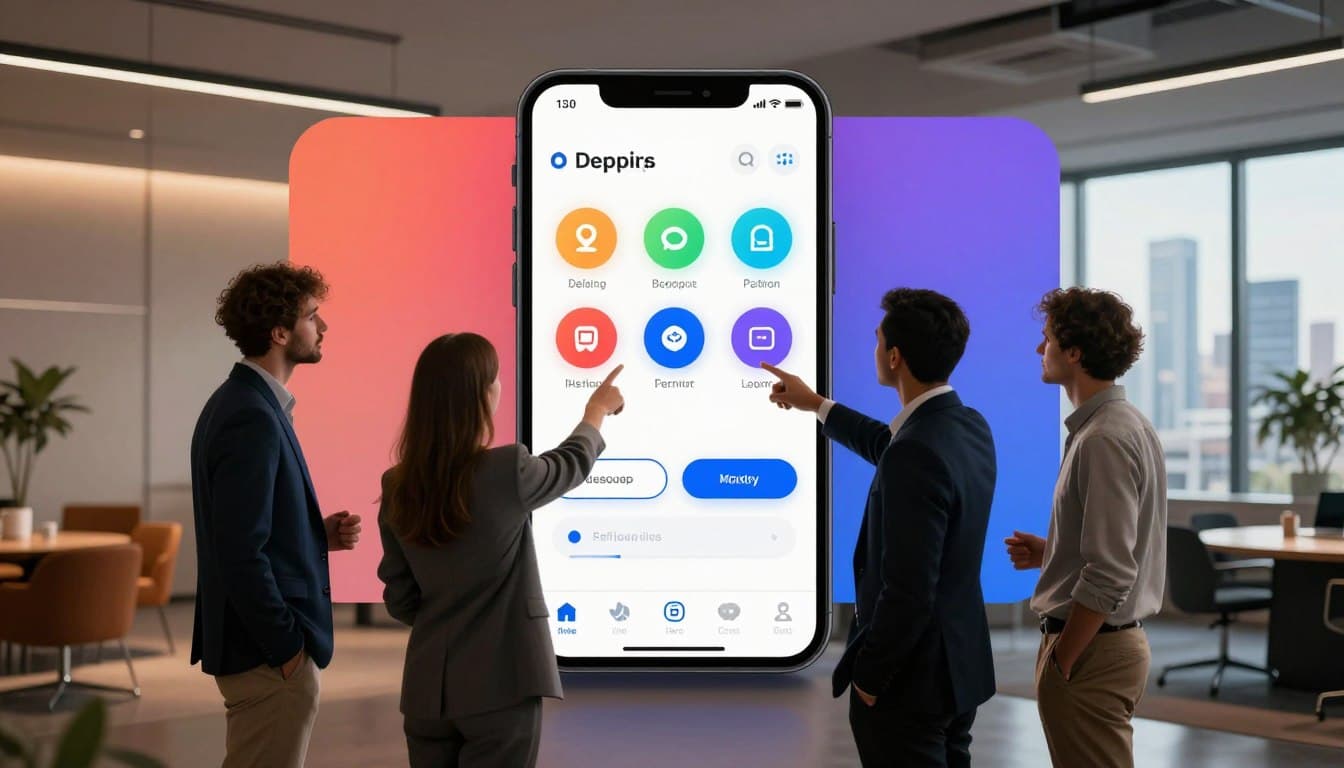
Beyond Safe: Evolving Mobile App Interface Design Principles
The world of mobile apps is constantly evolving, and with it, the principles that guide the user experience. As technology advances, the focus is shifting from merely creating safe and functional interfaces to crafting engaging and intuitive interactions.

The mobile app design landscape is transforming, driven by the need for more sophisticated and user-friendly experiences. This evolution is not just about aesthetics; it's about creating an intuitive UI/UX that makes apps more enjoyable and effective to use.
Key Takeaways
- The mobile app landscape is evolving beyond mere safety standards.
- Modern mobile app interfaces prioritize user experience and engagement.
- Evolving design principles focus on intuitive and sophisticated interactions.
- The goal is to create an enjoyable and effective user experience.
- UI/UX plays a crucial role in the success of mobile apps.
The Evolution of Mobile App Interface Design
Mobile app interface design has come a long way, transforming from simple beginnings to sophisticated, user-centric experiences. This evolution has been marked by significant shifts in design philosophy and technological capabilities.
From Skeuomorphism to Flat Design
The journey began with skeuomorphism, a design approach that mimicked real-world objects to make digital interfaces more relatable. However, as mobile devices became more prevalent, the need for a more streamlined and efficient design led to the adoption of flat design. This transition simplified interfaces, focusing on clarity and functionality.
The Rise of Minimalism and User-Centered Approaches
The shift towards minimalism continued as designers emphasized simplicity and ease of use. This user-centered design approach prioritized intuitive navigation and clear information architecture, enhancing the overall user experience.
Key Historical Milestones in Mobile UI
- The introduction of the iPhone in 2007, which revolutionized mobile app design with its multi-touch interface.
- The transition from skeuomorphic to flat design, marked by iOS 7 in 2013.
- The adoption of material design by Google in 2014, promoting a consistent and intuitive UI across Android devices.
These milestones have shaped the mobile UI history, influencing current design trends and practices. Understanding this evolution is crucial for designing effective and engaging mobile apps.
Current State of Mobile App Design
The mobile app design landscape is constantly evolving, driven by emerging technologies and shifting user expectations. As designers strive to create engaging and intuitive interfaces, they must stay abreast of the latest market trends and user expectations.
Market Trends and User Expectations
Currently, there's a significant emphasis on minimalism and user-centered design. Users expect apps to be not only visually appealing but also highly functional and easy to navigate. According to recent studies, apps that fail to meet these expectations often see higher abandonment rates.
The Balance Between Functionality and Aesthetics
Achieving a balance between functionality and aesthetics is crucial. Designers must ensure that the app is both beautiful and functional. As
"Design is not just about the aesthetics; it's about creating an experience that is intuitive and engaging."
This balance is key to retaining users and driving engagement.
Industry Standards and Best Practices
Adhering to industry standards and best practices is essential for creating successful mobile apps. This includes following platform-specific guidelines, ensuring accessibility, and maintaining a consistent design language throughout the app.
- Follow platform-specific design guidelines (e.g., Material Design for Android, Human Interface Guidelines for iOS).
- Prioritize accessibility to ensure inclusivity for all users.
- Maintain a consistent visual language throughout the app.
By understanding and implementing these principles, designers can create mobile apps that are both visually appealing and highly functional, meeting the evolving needs of users.
Core Principles of Modern Mobile Interface Design
Effective mobile interface design is grounded in principles that ensure inclusivity, accessibility, and intuitive navigation. These elements are crucial for creating a user-friendly experience that caters to a diverse audience.
Accessibility and Inclusivity
Designing for accessibility means considering users with various disabilities and ensuring that the app is usable by everyone. This includes implementing features like voice commands, screen reader compatibility, and high contrast mode. Inclusivity is about making sure the app is usable by people with different languages and cultural backgrounds.
- Implement clear and consistent navigation
- Use simple and understandable language
- Provide alternatives for visual and auditory content
Intuitive Navigation and Information Architecture
Intuitive navigation is critical for a seamless user experience. It involves organizing content in a logical manner and making sure that users can easily find what they're looking for. Information architecture plays a key role in this by structuring content in a way that is easy to understand and access.
Visual Hierarchy and Content Prioritization
A well-designed visual hierarchy guides the user's attention to the most important elements on the screen. This is achieved through the use of size, color, and positioning. Content prioritization involves determining what information is most critical and ensuring it is prominently displayed.
Color Theory and Typography in Mobile Contexts
The choice of color and typography significantly impacts the user experience. Colors can evoke emotions and convey meaning, while typography affects readability. In mobile contexts, it's essential to select colors and fonts that are legible on smaller screens.
- Choose colors that provide sufficient contrast
- Select typography that is clear and readable
- Consider the emotional impact of color choices
Beyond Conventional Design: Breaking New Ground
As mobile app design continues to evolve, it's pushing beyond traditional boundaries to create more engaging user experiences. This evolution is driven by several key factors that are redefining how users interact with mobile apps.
Emotional Design and Brand Personality
Emotional design plays a crucial role in creating a lasting impression on users. By incorporating elements that reflect a brand's personality, designers can foster a deeper connection between the user and the app. This connection is vital for building brand loyalty and enhancing user engagement.
- Using color schemes and typography that resonate with the brand's identity
- Incorporating storytelling elements that convey the brand's values
- Designing intuitive interfaces that make users feel comfortable and confident
Microinteractions and Purposeful Animation
Microinteractions and animations are not just aesthetic additions; they serve as crucial feedback mechanisms that enhance the user experience. By providing visual cues and responding to user inputs, microinteractions make the app feel more interactive and responsive.
Purposeful animation can guide the user's attention, illustrate the results of their actions, and create a more dynamic experience. For instance, a well-designed loading animation can make the waiting time feel less tedious.
Contextual and Adaptive Interfaces
Contextual and adaptive interfaces represent a significant shift towards personalization in mobile app design. By adapting to the user's context, preferences, and behaviors, apps can offer a more tailored experience.
Designing for Different User States and Scenarios
Designing for various user states and scenarios involves understanding the different contexts in which users might interact with the app. This could include different locations, times of day, or even the user's emotional state.
By considering these factors, designers can create adaptive interfaces that adjust to meet the user's needs, providing a more seamless and enjoyable experience.
User Psychology in Mobile App Design
Mobile app design that incorporates user psychology can significantly enhance user experience and engagement. By understanding how users perceive and interact with apps, designers can create more intuitive and user-friendly interfaces.
Cognitive Load Management
Managing cognitive load is crucial in mobile app design. It involves simplifying the complexity of information presented to the user, thereby reducing mental effort required to navigate the app. Techniques include simplifying navigation, minimizing cognitive overload, and using intuitive icons and clear typography.
Behavioral Design Patterns
Behavioral design patterns leverage psychological principles to influence user behavior. By understanding user motivations and behaviors, designers can create apps that encourage desired actions. For instance, using reward systems or personalization can enhance user engagement.
Building Trust Through Interface Design
Trust is a critical factor in the success of a mobile app. It can be fostered through transparent and consistent design. Clear feedback mechanisms and secure authentication processes are essential in building user trust.
Ethical Considerations in Persuasive Design
While persuasive design can enhance user engagement, it raises ethical concerns. Designers must ensure that their use of persuasive techniques is transparent and respects user autonomy. It's crucial to avoid manipulative practices that could exploit user vulnerabilities.
By integrating user psychology into mobile app design, developers can create applications that are not only functional but also engaging and trustworthy. This approach ultimately leads to a better user experience and higher user retention rates.
Technological Enablers of Advanced Design
The future of mobile app design is being shaped by technological advancements that enable more sophisticated and user-friendly interfaces. These technological enablers are not just enhancing existing design principles but are also opening up new possibilities for creating more engaging and interactive user experiences.
AI and Machine Learning Integration
AI and machine learning are revolutionizing mobile app design by enabling personalized user experiences. These technologies allow apps to learn user behavior and adapt accordingly, improving user engagement and retention. For instance, AI-driven chatbots are becoming increasingly common, providing users with instant support and feedback.
Augmented Reality Interfaces
Augmented Reality (AR) is another technological advancement that's making waves in mobile app design. AR interfaces overlay digital information onto the real world, creating a more immersive experience. Apps like Pokémon Go and various retail apps have shown the potential of AR in enhancing user engagement.

Voice and Gesture Controls
Voice and gesture controls are becoming increasingly popular, offering users a more intuitive way to interact with mobile apps. These control methods are not only convenient but also enable users with disabilities to use apps more easily.
Preparing Designs for Emerging Technologies
As technology continues to evolve, designers must prepare for emerging technologies. This involves staying updated with the latest trends and being flexible in design approaches. Designers should focus on creating scalable and adaptable designs that can be easily integrated with future technologies.
- Stay informed about the latest technological advancements.
- Design with flexibility in mind to accommodate future changes.
- Test designs with emerging technologies to ensure compatibility.
"The best way to predict the future is to invent it." - Alan Kay
By embracing these technological enablers and preparing for what's next, designers can create mobile apps that are not only advanced but also future-proof.
Cross-Platform Design Considerations
With the ever-increasing variety of devices and screen sizes, adopting a cross-platform design approach is crucial for app success. As users switch between different devices, a seamless experience across platforms is essential for maintaining user engagement and satisfaction.
Responsive vs. Adaptive Design Approaches
When it comes to cross-platform design, two primary approaches are considered: responsive and adaptive design. Responsive design involves creating a flexible grid that adjusts to different screen sizes, ensuring that the layout is preserved across various devices. On the other hand, adaptive design involves creating multiple fixed layouts that adapt to specific screen sizes, offering a more tailored experience.
| Design Approach | Description | Advantages |
| Responsive Design | Flexible grid adjusts to different screen sizes | Easy to maintain, flexible |
| Adaptive Design | Multiple fixed layouts for specific screen sizes | Tailored experience, precise control |
Platform-Specific Guidelines and Constraints
Each platform (iOS, Android, etc.) has its own set of design guidelines and constraints. Understanding these is crucial for creating a user-friendly interface that aligns with the platform's ecosystem.
Maintaining Brand Consistency Across Platforms
To ensure a cohesive brand identity, maintaining consistency across platforms is vital. This can be achieved through the use of design systems and component libraries, which help in streamlining the design process and ensuring that the brand's visual language is uniform.
Design Systems and Component Libraries
A design system is a comprehensive collection of guidelines, assets, and code that helps maintain consistency across a product or brand. Component libraries are part of this system, providing reusable UI components that can be easily integrated into the design, thus facilitating a consistent and efficient design process.
Measuring Design Success: Beyond Aesthetics
To truly measure design success, we must look beyond the surface level and analyze key performance indicators that reflect how well a mobile app is performing in terms of user interaction and satisfaction.
Design success is not solely determined by how visually appealing an app is, but by its ability to engage and retain users. This involves a combination of quantitative and qualitative metrics.
User Engagement Metrics
User engagement metrics provide insights into how users interact with the app. Key metrics include session length, frequency of use, and feature adoption rates. By analyzing these metrics, designers can identify areas of the app that are particularly engaging or confusing.
Conversion and Retention Analytics
Conversion analytics help measure the app's effectiveness in achieving its goals, such as completing a purchase or signing up for a service. Retention analytics, on the other hand, track how well the app keeps users over time. Together, they provide a comprehensive view of the app's performance.
| Metric | Description | Importance |
| Session Length | Average time spent in the app per session | Indicates user engagement |
| Feature Adoption Rate | Percentage of users using specific features | Helps identify popular features |
| Retention Rate | Percentage of users retained over a period | Measures long-term user satisfaction |
Qualitative Feedback Integration
While quantitative data is crucial, qualitative feedback provides context and insights into user preferences and pain points. This can be gathered through surveys, user interviews, and reviews.
Iterative Design Based on Data
The key to successful design is iteration. By continuously collecting data and feedback, designers can refine and improve the app, making it more user-friendly and effective.

By combining these approaches, designers can create mobile apps that are not only aesthetically pleasing but also highly functional and user-centric.
Case Studies: Revolutionary Mobile App Design
The evolution of mobile app design is marked by a focus on user-centric and intuitive interfaces. This shift has led to the development of revolutionary apps across various industries, significantly enhancing user experiences.
Finance Apps: Simplifying Complex Information
Finance apps have become increasingly sophisticated, simplifying complex financial information for users. For instance, mobile banking apps now offer intuitive interfaces that allow users to manage their accounts, transfer funds, and invest with ease.
As noted by a financial technology expert, "The key to successful finance app design is presenting complex data in an easily digestible format."
"Users should be able to glance at their dashboard and understand their financial health at a glance."
Health and Wellness: Engaging and Motivating Users
Health and wellness apps have seen a significant rise in popularity, with designs that engage and motivate users. Fitness tracking apps, for example, use personalized recommendations and gamification to encourage users to reach their fitness goals.
- Personalized coaching
- Gamification elements
- Social sharing features
E-commerce: Streamlining the Purchase Journey
E-commerce apps have revolutionized the shopping experience by streamlining the purchase journey. One-click ordering and personalized product recommendations are just a few features that have made shopping more convenient.
According to a retail industry analyst, "E-commerce apps that offer a seamless and intuitive shopping experience are more likely to retain customers and drive sales."
Lessons Learned from Successful Redesigns
Analyzing successful app redesigns reveals several key lessons. Firstly, user feedback is crucial in identifying areas for improvement. Secondly, simplifying navigation and reducing cognitive load can significantly enhance user engagement.
| Redesign Element | Impact on User Experience |
| Simplified Navigation | Increased user engagement |
| Personalized Recommendations | Improved customer retention |
| Streamlined Checkout | Higher conversion rates |
By understanding these elements, designers can create more effective and user-friendly mobile apps across various industries.
Future Trends in Mobile Interface Design
Mobile interface design is evolving rapidly, with future trends pointing towards more personalized, sustainable, and immersive experiences. As technology advances, designers are faced with the challenge of creating interfaces that not only meet user expectations but also anticipate their needs.
Biometric Integration and Personalization
The integration of biometric technologies is set to revolutionize mobile interface design by offering enhanced security and personalized user experiences. Facial recognition, fingerprint scanning, and voice recognition are becoming increasingly sophisticated, allowing for more seamless and secure interactions.
Sustainable and Ethical Design Practices
As concern for the environment grows, sustainable design practices are becoming a priority in mobile interface design. This includes designing for energy efficiency, reducing digital waste, and promoting eco-friendly user behaviors. Ethical design practices are also gaining importance, focusing on user well-being and data privacy.
The Impact of Foldable and Flexible Displays
The advent of foldable and flexible displays is opening new possibilities for mobile interface design. These technologies require designers to rethink layout, navigation, and overall user experience to adapt to different form factors and usage scenarios.
Preparing for the Next Wave of Design Innovation
To stay ahead, designers must be prepared to adapt to these emerging trends and technologies. This involves embracing a culture of continuous learning, experimenting with new design tools and methodologies, and collaborating across disciplines to create innovative and user-centric mobile interfaces.
Conclusion
As we've explored throughout this article, the world of mobile app interface design is undergoing a significant transformation. The key to success lies in embracing evolving mobile app design principles that prioritize user experience, accessibility, and innovation.
By integrating AI, AR, and other cutting-edge technologies, designers can create more engaging, intuitive, and personalized experiences. The future of mobile app design is not just about aesthetics; it's about crafting interfaces that seamlessly integrate into users' lives.
As we look to the design future, it's clear that the most successful apps will be those that balance functionality with emotional resonance. By staying attuned to user needs and leveraging the latest design trends and technologies, developers can create mobile apps that truly make a lasting impact.
The journey beyond safe design principles is ongoing, and the possibilities are endless. As mobile app design continues to evolve, we can expect to see even more innovative and user-centric solutions that redefine the way we interact with technology.