Maximize Productivity: Smart Home Office Design for Small Spaces
Creating a productive home office in small spaces can be a challenge. With the rise of remote work, it's essential to have a dedicated workspace that fosters efficiency and comfort.

A well-designed home office can significantly boost productivity. By optimizing the layout and incorporating smart elements, you can create a space that promotes focus and creativity.
This article will explore the key strategies for maximizing productivity in small home offices, providing you with practical tips and inspiration to create a workspace that works for you.
Key Takeaways
- Optimize your home office layout for maximum productivity
- Utilize smart storage solutions to minimize clutter
- Incorporate good lighting to enhance focus
- Select ergonomic furniture for comfort and efficiency
- Create a distraction-free zone for improved concentration
The Challenges of Working in Small Spaces
Many urban dwellers face significant hurdles when trying to create an effective home office in small spaces. The struggle to balance work and personal life within a limited area can be overwhelming.
Common Space Limitations in Urban Homes
Urban homes often come with compact layouts, making it difficult to dedicate a specific area for work. Space limitations can lead to a cluttered and disorganized workspace, negatively impacting productivity.
The Psychological Impact of Cluttered Workspaces
Cluttered workspaces can have a significant psychological impact, leading to increased stress levels and decreased focus. A cluttered environment can make it challenging to separate work from personal life, further exacerbating the issue.
By understanding these challenges, we can begin to explore design solutions that help mitigate the negative effects of working in small spaces.
Assessing Your Available Space
Before designing your home office, it's crucial to understand the space you're working with. Assessing your available space is a multi-step process that helps you make the most of the area you have.
Measuring and Mapping Your Area
Start by measuring your room or designated workspace. Record the dimensions of the space, including the location of doors, windows, and any architectural features. Create a simple floor plan or map to visualize your space. This will help you identify potential areas for your home office and any limitations you may face.
Identifying Multi-Purpose Opportunities
Consider how you can use your space for multiple purposes. For example, a closet can be converted into a compact office, or a corner of a room can be dedicated to a workspace. Think about how different areas can serve different functions, such as a desk with storage or a murphy desk that folds up against the wall.
Determining Your Work Requirements
Make a list of your work requirements, including the type of work you do, the equipment you need, and any specific needs you may have, such as ergonomic furniture or storage for documents. This will help you tailor your space to your needs.
| Space Assessment Criteria | Description | Importance Level |
| Measuring Space | Accurate dimensions of the room or workspace | High |
| Multi-Purpose Opportunities | Identifying areas that can serve multiple functions | Medium |
| Work Requirements | Listing the specific needs for your work | High |
By following these steps, you can effectively assess your available space and create a home office that is both functional and efficient.
Principles of Productive Small Space Design
To maximize productivity in small spaces, it's crucial to apply effective design strategies. A well-designed workspace can significantly enhance your ability to focus and work efficiently, even in limited areas.
Balancing Functionality and Aesthetics
A productive workspace must balance functionality and aesthetics. While functionality is crucial for efficiency, a visually pleasing environment can boost creativity and overall job satisfaction. Consider incorporating elements like ergonomic furniture and calming color schemes to create a harmonious workspace.
Creating Physical and Mental Boundaries
Establishing clear physical boundaries is vital in small spaces to separate work from personal areas. This can be achieved through the use of room dividers or curtains. Additionally, creating mental boundaries involves setting routines and practices that signal the start and end of work hours, helping to maintain a healthy work-life balance.
The Importance of Flexibility in Limited Spaces
Flexibility is key in small space design. Incorporating multi-functional furniture and adaptable layouts can help you make the most of your available space. This flexibility allows you to adjust your workspace as needed, ensuring it remains productive and efficient.
By applying these principles, you can create a productive and comfortable workspace, even in the most limited of spaces.
Space-Saving Furniture Solutions
Maximizing space in small home offices requires innovative furniture solutions. The right furniture can significantly impact productivity and comfort in compact workspaces.
Foldable and Convertible Desks
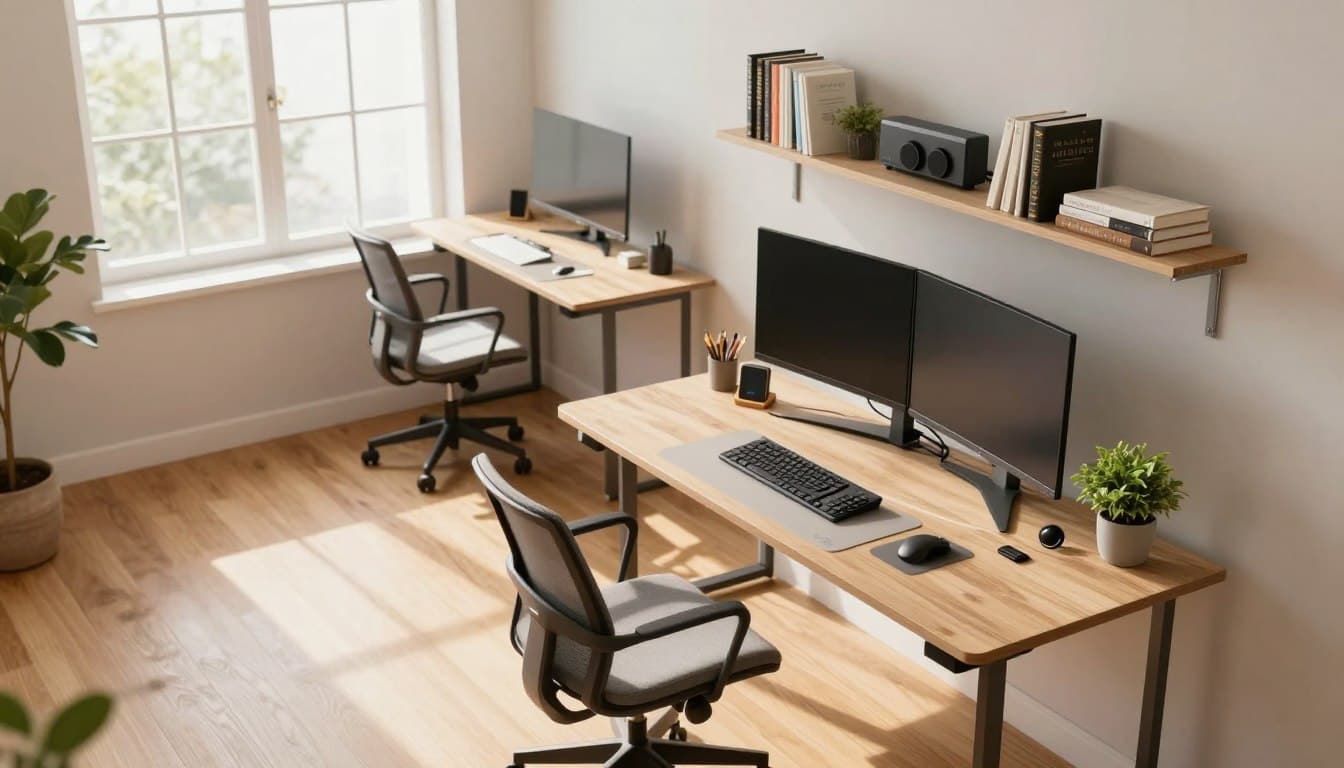
Foldable and convertible desks are ideal for small spaces. They can be easily folded and stored away when not in use, freeing up valuable floor space. For instance, a wall-mounted foldable desk can serve as both a workspace and a decorative shelf.
Wall-Mounted and Floating Options
Wall-mounted and floating furniture options are excellent for creating a sense of openness. These designs keep the floor clear, making the room appear larger. A floating desk can add a touch of modernity while maintaining functionality.
Compact Storage Solutions
Compact storage is crucial in small home offices. Utilizing vertical storage units and under-desk drawers can help keep the workspace organized and clutter-free.
| Furniture Type | Benefits | Space-Saving Features |
| Foldable Desks | Easy to store, versatile | Folds against the wall |
| Wall-Mounted Shelves | Keeps floor clear, adds storage | Mounted directly to the wall |
| Compact Storage Units | Organizes workspace, reduces clutter | Vertical design, under-desk options |
By incorporating these space-saving furniture solutions, small home offices can become more efficient and comfortable, ultimately enhancing productivity.
Vertical Space Utilization Strategies
Vertical space utilization is a key strategy for optimizing small home office layouts. By effectively using the vertical dimension, you can significantly enhance the functionality and organization of your workspace.
Wall-Mounted Shelving Systems
Wall-mounted shelving systems are an excellent way to utilize vertical space. They provide additional storage for books, office supplies, and decorative items, keeping your work surface clear and clutter-free. Consider installing shelves with adjustable heights to accommodate items of various sizes.
Overhead Storage Options
Overhead storage options, such as storage units or shelves mounted high on walls, can be used to store less frequently used items. This helps keep your main workspace organized while still making use of otherwise wasted space.
Door and Behind-Furniture Storage
Utilizing the space behind doors and furniture is another effective strategy. Over-the-door storage racks and behind-furniture storage solutions can be used to hang bags, store office supplies, or keep important documents within easy reach.
| Storage Solution | Description | Benefits |
| Wall-Mounted Shelves | Shelves installed on walls | Additional storage, keeps work surface clear |
| Overhead Storage | Storage units mounted high on walls | Stores less frequently used items, maximizes vertical space |
| Behind-Furniture Storage | Storage solutions attached behind furniture | Utilizes otherwise wasted space, keeps items within reach |
By implementing these vertical space utilization strategies, you can create a more organized, efficient, and productive home office, even in the smallest of spaces.
Ergonomic Design for Physical Wellbeing
Ergonomic design is crucial for maintaining physical wellbeing in small home offices. As we spend more time working from home, it's essential to create a workspace that supports our health and productivity. "A well-designed workspace can significantly reduce the risk of developing musculoskeletal disorders and improve overall comfort," according to ergonomic experts.
Choosing the Right Chair for Limited Spaces
Selecting the right chair is vital for maintaining proper posture. Look for a chair that is adjustable in height and lumbar support. Consider a chair with a compact design that fits snugly into your workspace without compromising on comfort.
Desk Height and Positioning Essentials
The height and positioning of your desk play a significant role in ergonomic design. Ensure your desk is at a comfortable height that allows you to work with your elbows at a 90-degree angle. Positioning your desk near a window can also boost your mood and productivity by providing natural light.

Accessories for Proper Posture in Small Workspaces
Accessories like monitor risers, keyboard trays, and footrests can significantly enhance your workspace ergonomics. These tools help maintain proper posture, reducing strain on your body. For instance, a monitor riser can help position your screen at eye level, while a keyboard tray can keep your wrists straight during typing.
By incorporating these ergonomic design principles, you can create a healthier and more productive home office. Prioritizing your physical wellbeing is key to maintaining a comfortable and efficient workspace.
Lighting Design for Small Office Spaces
Small office spaces require thoughtful lighting design to optimize productivity and well-being. Effective lighting can make a significant difference in how a space feels and functions.
Maximizing Natural Light
Natural light is essential for creating a welcoming and healthy workspace. To maximize natural light, consider using sheer curtains or blinds that allow sunlight to filter in while reducing glare on computer screens.
Tips for maximizing natural light:
- Place your workspace near a window
- Use reflective surfaces to bounce light around the room
- Avoid heavy drapery that blocks sunlight
Task Lighting Essentials
Task lighting is crucial for specific work areas, providing focused light where it's needed most. This can include desk lamps or under-cabinet lighting.
Ambient Lighting for Mood and Productivity
Ambient lighting sets the overall tone of the workspace, influencing both mood and productivity. Soft, warm lighting can create a cozy atmosphere, while bright lighting can enhance focus.
| Lighting Type | Purpose | Examples |
| Natural Light | Overall Illumination | Windows, Skylights |
| Task Lighting | Focused Work Areas | Desk Lamps, Under-Cabinet Lighting |
| Ambient Lighting | Mood and Atmosphere | Floor Lamps, String Lights |
By combining these lighting strategies, you can create a well-lit workspace that supports both physical and mental well-being.
Technology Integration in Compact Workspaces
In today's compact workspaces, technology integration is key to maximizing productivity and efficiency. By leveraging the right technologies, individuals can create a more streamlined, organized, and effective work environment.
Wireless Solutions to Reduce Cable Clutter
One of the most significant challenges in compact workspaces is cable clutter. Wireless solutions can greatly alleviate this issue. Wireless keyboards, mice, and headphones not only reduce clutter but also provide more flexibility in workspace arrangement.
- Wireless charging pads for devices
- Bluetooth connectivity for peripherals
- Wi-Fi extenders for reliable internet
Multi-Functional Devices for Space Efficiency
Multi-functional devices are another crucial element in optimizing compact workspaces. Devices that combine printing, scanning, and copying functions can significantly reduce the need for separate machines, saving valuable space.
Smart Home Technology for Automation and Productivity
Integrating smart home technology can further enhance productivity in compact workspaces. Smart lighting, temperature control, and voice assistants can automate routine tasks, allowing individuals to focus on more critical work.
- Smart lighting systems for optimal illumination
- Voice-controlled assistants for task management
- Automated temperature control for comfort
Color Psychology and Visual Design Elements
Color psychology plays a crucial role in creating a productive home office environment. The colors and visual elements you choose can significantly impact your focus, mood, and overall productivity.
Colors That Enhance Focus and Productivity
Certain colors are known to enhance focus and productivity. For instance, blue is often associated with calmness and trust, while green can help reduce eye fatigue. Incorporating these colors into your workspace can create a more conducive work environment.
Visual Tricks to Make Spaces Appear Larger
Visual tricks can make a small space appear larger. Using mirrors, light colors on walls, and minimal decor can create the illusion of more space.

Balancing Personal Style and Functionality
Balancing personal style with functionality is key to a productive workspace. Choose decor that reflects your personality but also serves a purpose. For example, a decorative storage basket can add style while keeping clutter at bay.
| Color | Effect on Productivity |
| Blue | Enhances calmness and focus |
| Green | Reduces eye fatigue |
| Yellow | Boosts creativity and energy |
By thoughtfully incorporating color psychology and visual design elements, you can create a home office that is both productive and reflective of your personal style.
Organization Systems for Ongoing Productivity
Maintaining productivity in a small home office requires more than just a well-designed space; it demands a robust organization system. Effective organization is crucial for efficiency and reducing stress.
Digital Organization Tools
Digital tools can significantly enhance your productivity. Consider using project management software like Trello or Asana to keep track of tasks and deadlines. Cloud storage services such as Google Drive or Dropbox can help you access files from anywhere and share them easily with colleagues or clients.
Physical Filing Systems for Small Spaces
For physical documents, a compact filing system is essential. Utilize vertical filing cabinets or drawer organizers to keep important papers within reach but out of the way. Labeling is key to ensuring that you can quickly find what you need.
Daily Maintenance Routines
To keep your home office organized, establish a daily routine. Set aside a few minutes each day to tidy up, file away documents, and update your task list. Consistency is key to maintaining an organized and productive workspace.
| Organization Tool | Description | Benefit |
| Trello | Project management tool | Enhances task organization |
| Google Drive | Cloud storage service | Facilitates file sharing and access |
| Vertical Filing Cabinet | Physical storage solution | Saves space and keeps documents organized |
By implementing these organization systems, you can maintain a productive home office environment.
Creating Work-Life Boundaries in Small Spaces
Maintaining a healthy work-life balance in small spaces requires intentional design and habits. When your workspace doubles as your living space, it's easy for work to bleed into personal time and vice versa.
One effective strategy is to use physical dividers and room separators to create a visual distinction between work and living areas. This can be achieved with:
- Room dividers or screens
- Curtains or sliding panels
- Shelving units that separate spaces
Physical Dividers and Room Separators
Physical dividers not only help in demarcating workspaces but also add an aesthetic element to your home. For instance, a well-placed bookshelf can serve as both a divider and a storage unit.
Temporal Boundaries and Scheduling
Establishing temporal boundaries through scheduling is crucial. Set clear work hours and stick to them, just as you would in an office. This helps in creating a mental distinction between work and personal time.
"You can't pour from an empty cup. Take care of yourself first."
Unknown
Psychological Techniques for Mental Separation
Employing psychological techniques can further enhance mental separation. Techniques include:
| Technique | Description |
| Meditation | Practice mindfulness to transition between work and personal modes |
| Rituals | Engage in activities that signal the end of work, such as a short walk or a hobby |
| Journaling | Write down your tasks and accomplishments to clear your mind |
By implementing these strategies, you can create a more defined boundary between your work and personal life, even in the smallest of spaces.
Conclusion: Bringing It All Together for Your Ideal Productive Space
Creating a productive home office in small spaces requires careful planning and design. By applying the principles outlined in this article, you can maximize your productivity and create a functional workspace.
Effective home office design involves balancing functionality and aesthetics, creating physical and mental boundaries, and utilizing space-saving furniture solutions. By incorporating these elements, you can create a productive space that meets your needs.
In small spaces, it's essential to optimize your layout, use vertical space, and invest in ergonomic design. By doing so, you can enhance your productivity and overall wellbeing.
By implementing these strategies, you can create a workspace that is both functional and comfortable, allowing you to achieve your goals and maintain a healthy work-life balance.